Sun, Wind & Geography
How Cool Climate Affects the Vineyards in Monterey
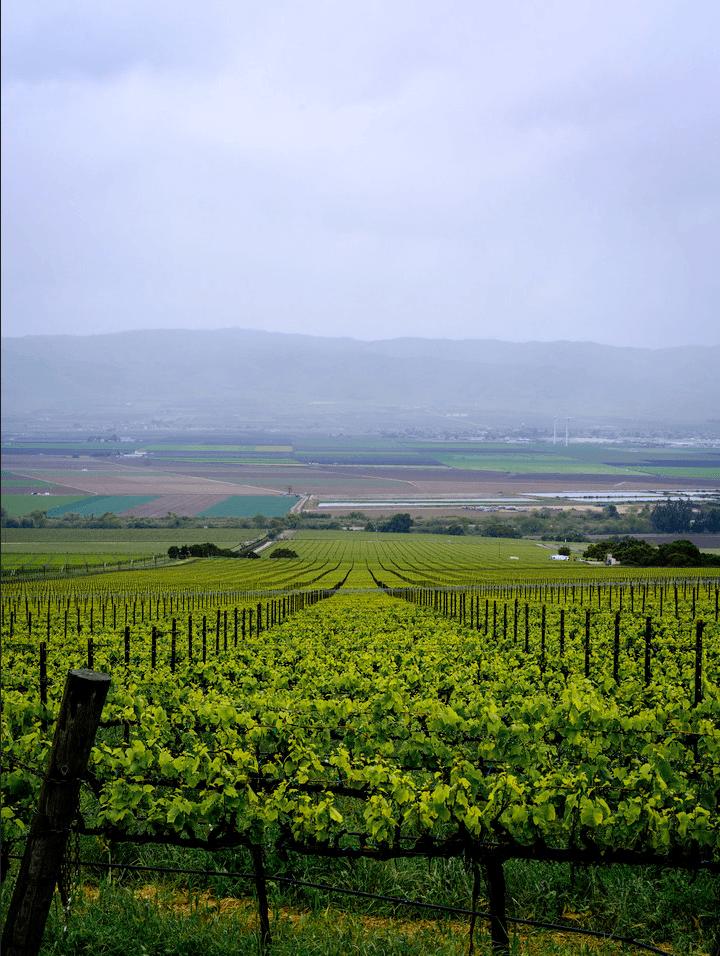
Multiple environmental forces shape the Santa Lucia Highlands, and they work together every single day. These vineyards in Monterey are one of the few places in California where abundant sunshine meets a genuinely cold growing season — not by luck, but by geography. An offshore canyon, cooling fog and relentless afternoon winds, and a steep granite benchland aren't separate facts about this appellation. They're a single system. Together, they create a consistently cool growing environment that stretches the season out, and gives the fruit the time it needs to develop flavor without losing its nerve.
The Climate
The Santa Lucia Highlands pairs abundant sunshine with a genuinely cold growing season — a combination almost nothing else in California can claim. The source sits just offshore. One of the world's largest submarine canyons lies at the mouth of Monterey Bay, and its 300 cubic miles of cold, deep-sea water drive the fog and maritime winds that funnel into the vineyards nearly every day, at nearly the same time.
That daily rhythm is what shapes the wine. Budbreak comes early, and the long, slow stretch to an October harvest is the whole point. Cool foggy mornings provide that extra bit of moisture in an arid region — just 10-12 inches of rainfall in the Highlands each year — less than half what most cool-climate wine regions receive. Daily driving winds shut down the vines, allowing them to slowly build just enough sugar and hold acid at once, instead of trading one for the other. It also makes this place dependable. Without spring frost scares or harvest-threatening fall rains, there’s a — a steady rhythm, vintage after vintage, even as the climate grows less predictable everywhere else. The result is wine with both richness and tension, generous on release and structured enough to age for years.
The Wind
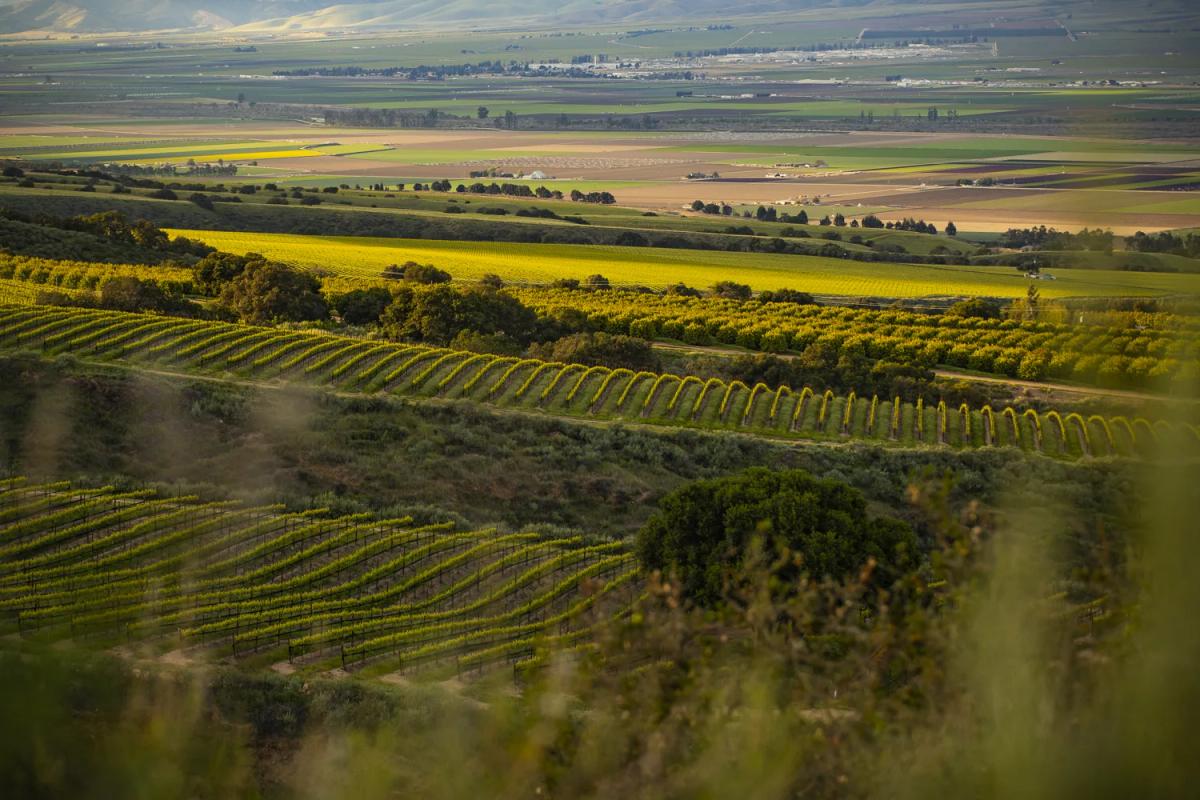
Every afternoon during the growing season, almost without exception, wind pushes south through the appellation from the cold waters of Monterey Bay. It starts mid-afternoon and runs past dusk, with 10 to 15-mile-per-hour winds and gusts up to 25 miles per hour.
That wind isn't just cooling the vineyard. It's changing the fruit. The vines react to stress; grape skins thicken and accumulate carbon, which concentrates phenolics and deepens flavor. It also pauses photosynthesis for hours every day, shortening growth and sugar development, while lengthening the season overall. The Santa Lucia Highlands end up with a longer total growing season than most cool-climate regions, and a slow, even march to harvest, without the threat of fall rains.
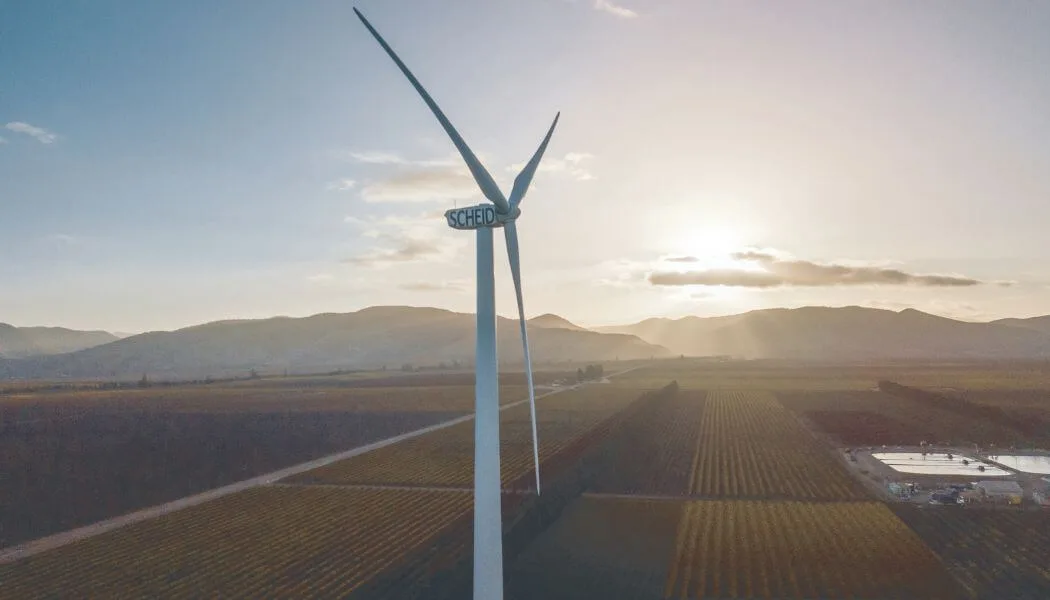
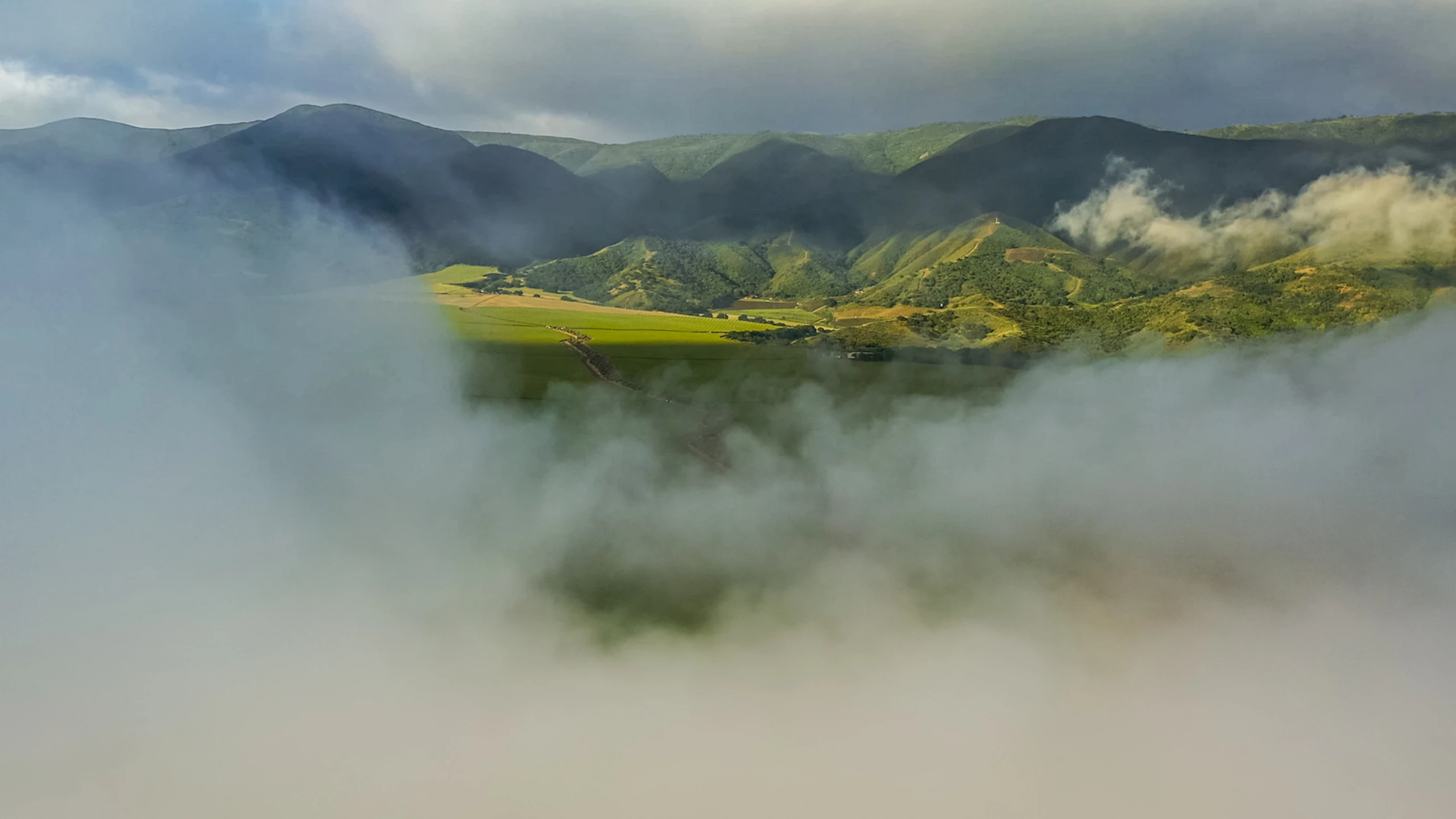
A Scheid Vineyards turbine stands over the Highlands at sunset — a literal marker of the daily maritime winds that slow ripening and give the AVA its signature balance of richness and acid.
1 / 3
The Geography
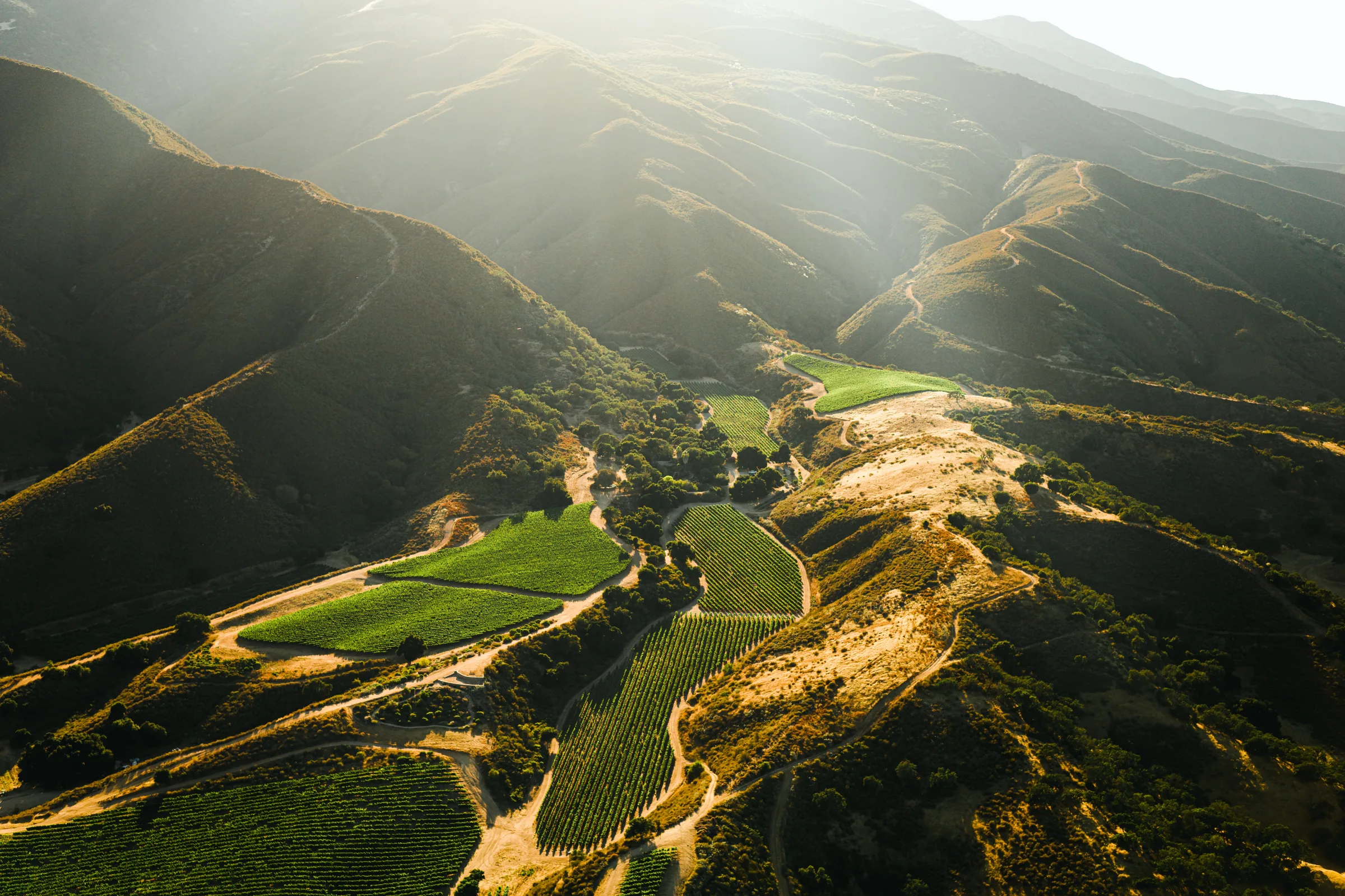
The Santa Lucia Highlands sits on the south-eastern face of the Santa Lucia mountain range in Monterey County, steep benchland terraces rising above the Salinas Valley floor to elevations from 100 to 1,700 feet. Decomposed granite runs through the soils, often with shale or schist — thin, rocky ground that yields little and gives that little real concentration and a characteristic minerality.
It's east-facing for a reason that matters: the vines catch morning sun, then the afternoon wind and fog roll in to do their work. The land itself is what makes the climate system land where it does.
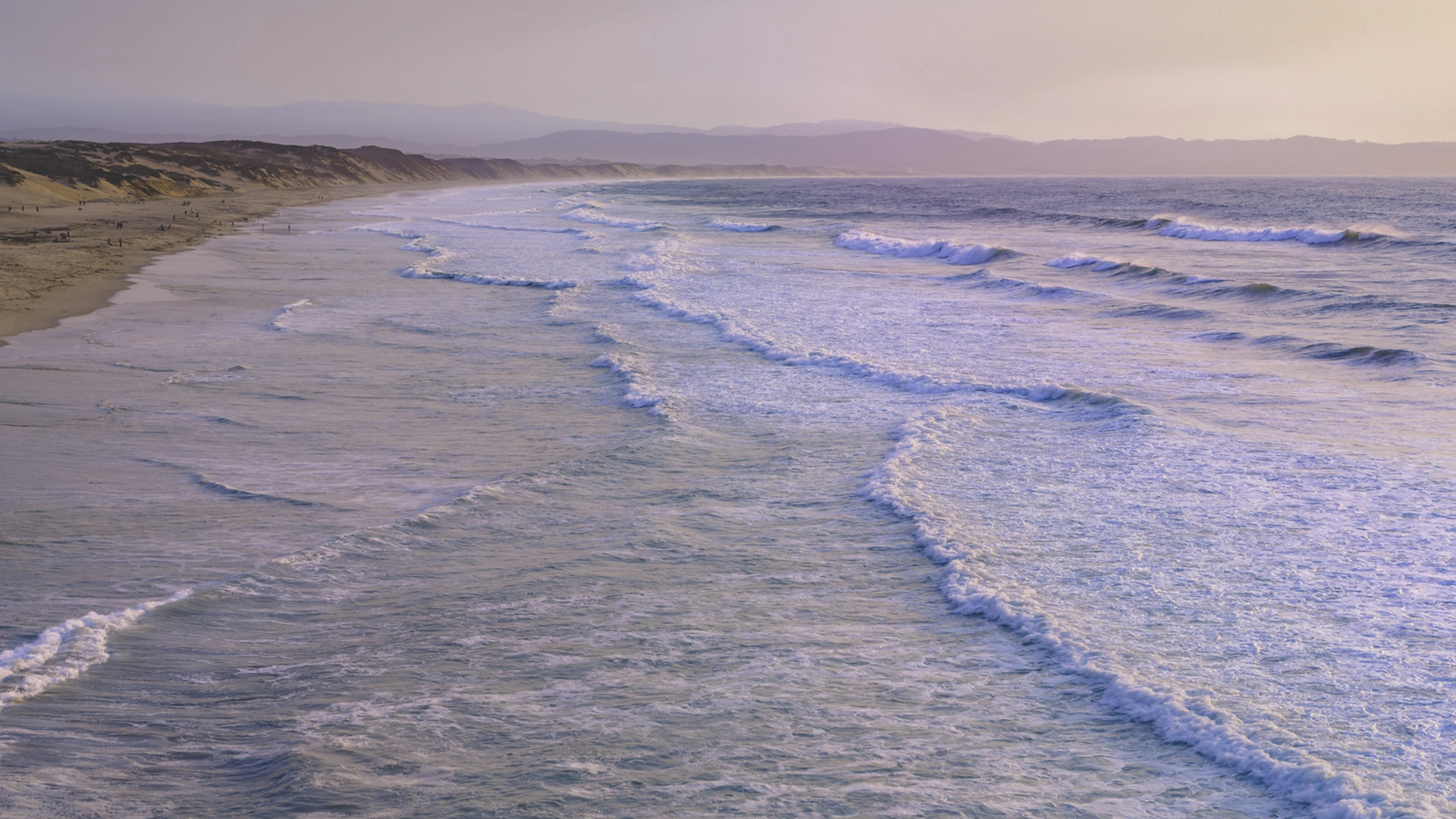
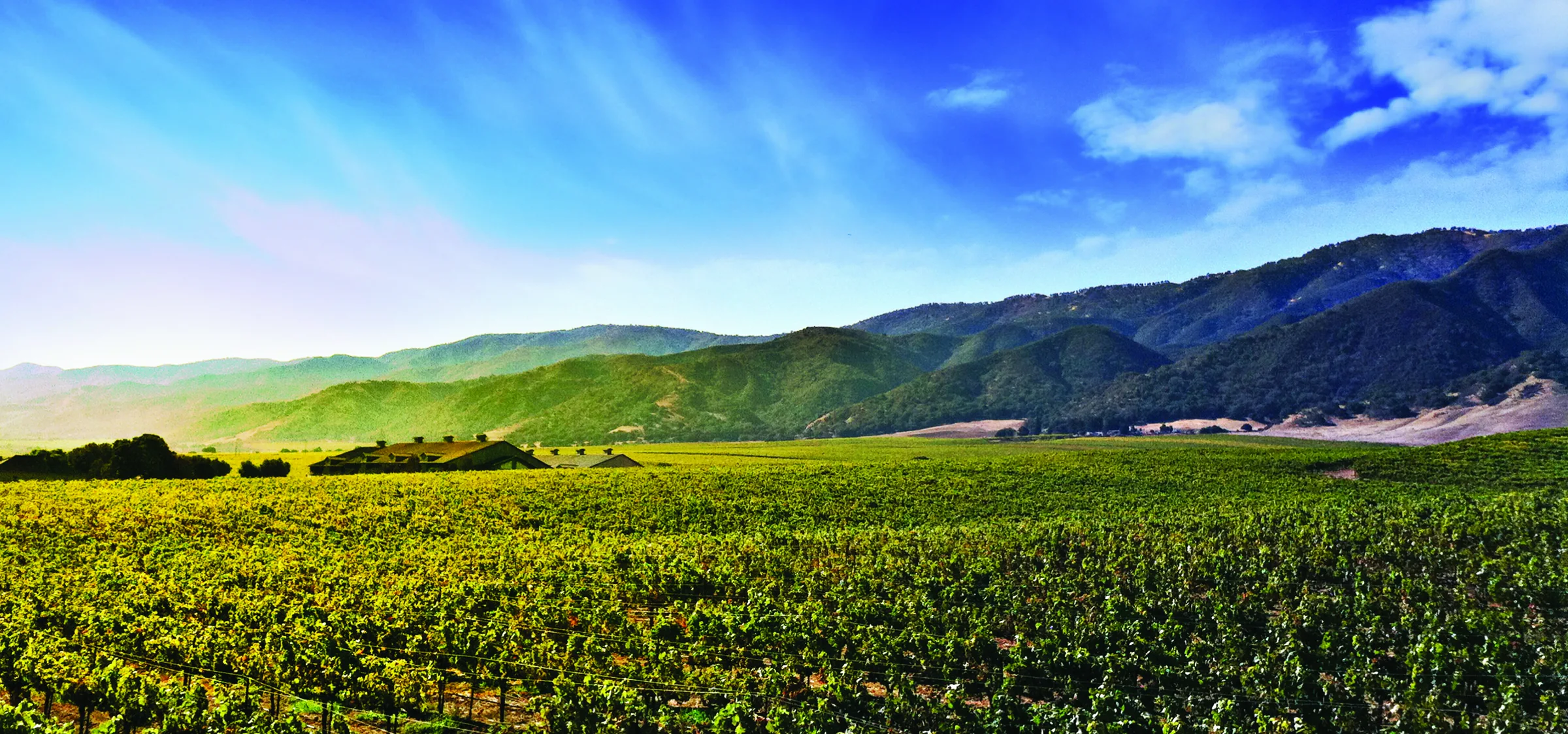
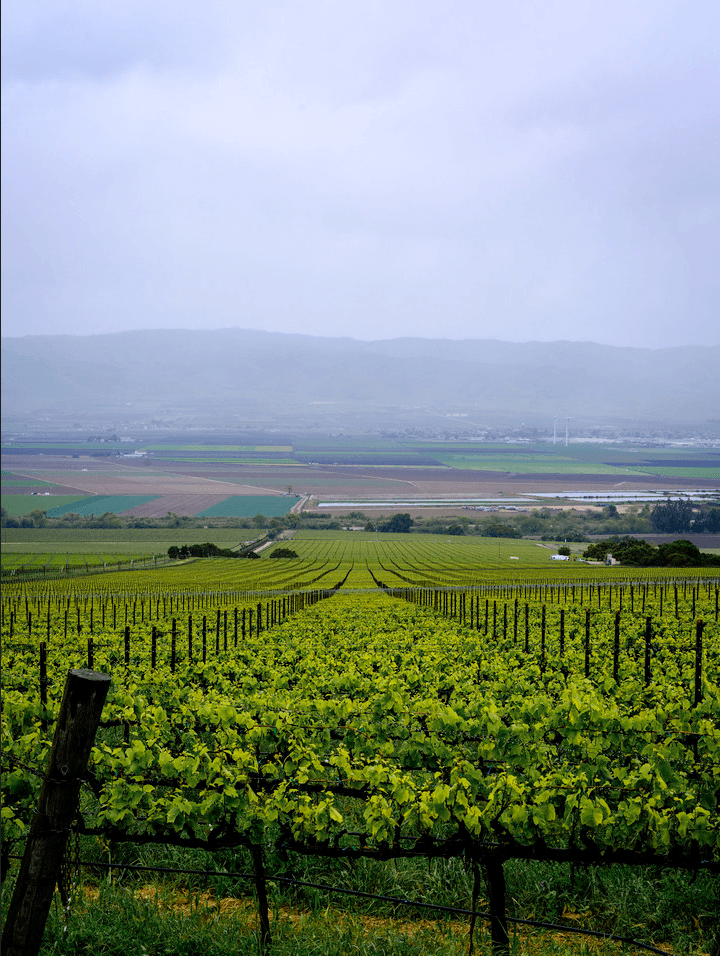
The cold Pacific at Monterey Bay — the deep offshore waters that drive the daily fog and wind defining every growing season in the Santa Lucia Highlands.
1 / 3
Explore the Vineyards
See how elevation, aspect, and exposure differ across the Santa Lucia Highlands.